Seven nautical miles. That is the whole distance between the mainland sand harbor at Landeyjahofn and the pier on Heimaey, and it is the reason this page exists. Iceland's ring road runs within four miles of the water and then simply stops caring about the islands. There is no bridge, no tunnel, no causeway and no plan for one. A vestmannaeyjar vacation package with a weather dependent crossing is the honest name for six nights on an island that the North Atlantic can close.
The numbers we quote clients first are the cancellation figures, because they are the ones that change what you should book around them. Across a normal year the Landeyjahofn route fails to sail on roughly one day in seven. That average hides everything. In June, July and August the route runs on about ninety-four days out of a hundred. In January and February it runs on about seventy, and the misses cluster: when a low parks off the south coast, three consecutive days go, not one.
Heimaey is five square miles of it, with about forty-three hundred people living on the flat ground between two cones. One of those cones did not exist before January 23, 1973. That is the other thing worth knowing before you commit to the sea passage, because the island is small enough to walk across in ninety minutes and strange enough to hold you for six days anyway.
- Step
- No road at all , No road
- How far from the road
- There is no road to Vestmannaeyjar at all: the last pavement ends at the harbor mouth at Landeyjahofn on the mainland, and the remaining seven nautical miles are somebody else's timetable across the open Atlantic.
- What the distance costs
- The crossing is thirty-five minutes when it runs from Landeyjahofn and just under three hours when swell forces the sailing to Thorlakshofn instead, so the same ticket can cost you a morning or a whole day. Bags go aboard on a wheeled cart and are handled once; there is no portage and no height gained, because the walk from the pier into town is four hundred yards of flat asphalt and the harbor is the town. What the distance costs is time and certainty, not effort: Landeyjahofn is a dredged sand harbor with a mouth that silts and shoals, and when the swell runs above roughly eight feet the sailing moves to the long route or stops. If the crossing is closed on your arrival day, we hold the mainland night at Hvolsvollur and the island nights shift; if it closes on your departure day, the last island night is extended and the aircraft is the alternative at fourteen seats and a weight limit that fills fast.
- Nights
- 6
- From
- $3,380 per person
- Shape of it
- ferry only, and swell closes it often
- What is in the figure
- Six nights on Heimaey in a two-person room with private bath; return deck passage for two adults on the sailing that runs that day, whichever harbor it runs from; one contingency mainland night held at Hvolsvollur against a closed crossing, charged only if used; a guided half day on the 1973 lava field and the buried street; boat passage around the south cliffs and into the sea caves on a day the swell allows it; harbor transfer of luggage to the room; a printed sailing card with the day's departure, the alternate harbor and the phone number that answers when it changes.
- What is not
- Flights to Iceland and any domestic aircraft seat if you choose to fly rather than sail; the vehicle deck fee if you bring a rental car aboard, and the mainland drive from Keflavik to either harbor, which is roughly ninety miles to Landeyjahofn and fifty-five to Thorlakshofn; all meals other than the breakfast served where you sleep; the puffin cliff walk out to Storhofdi, which is on foot and free but takes a morning; boots, shell layers and gloves, which the wind here will find the gaps in; entry to the volcano exhibition and the aquarium; ferry deck upgrades and cabin space on the long route; anything bought in the harbor town; gratuities; and the cost of extra mainland nights beyond the single held night if the sea stays shut longer than one day.
- Who it does not suit
- Anyone who needs the departure day to be fixed in advance should not book this, because it cannot be. Anyone traveling on a same-day international connection out of Keflavik on the final morning should not book it either: the crossing has closed for three days running in February and the aircraft holds fourteen people. The lava field walk is loose scoria on a grade, the cliff path to Storhofdi is exposed to a wind that regularly runs above forty miles an hour, and the boat around the south side pitches; none of that is optional to the trip's character even though each piece is optional on the day.
What the ground actually is, once you are standing on it
There is no soil to speak of and there are no trees. The island is basalt, scoria and ash, and where the 1973 flow came through it is a field of loose black clinker that rings underfoot like broken pottery. Eldfell rises 656 feet from the eastern edge of town, and the walk to the top is a forty-minute grind on cinder that gives back a third of every step. In places the ground is still warm enough to feel through a boot sole, fifty-odd years on.
The town sits in a natural bowl with the harbor at its throat, and that harbor nearly closed for good in 1973 when the flow advanced toward the entrance and was slowed by seawater pumped onto its face. What survived is a narrower, better-sheltered mouth than the one that existed before. Walk the eastern edge of town and you are walking on top of four hundred houses. A few have been dug back out; you can look down into a kitchen doorway at the bottom of a cut in the ash.
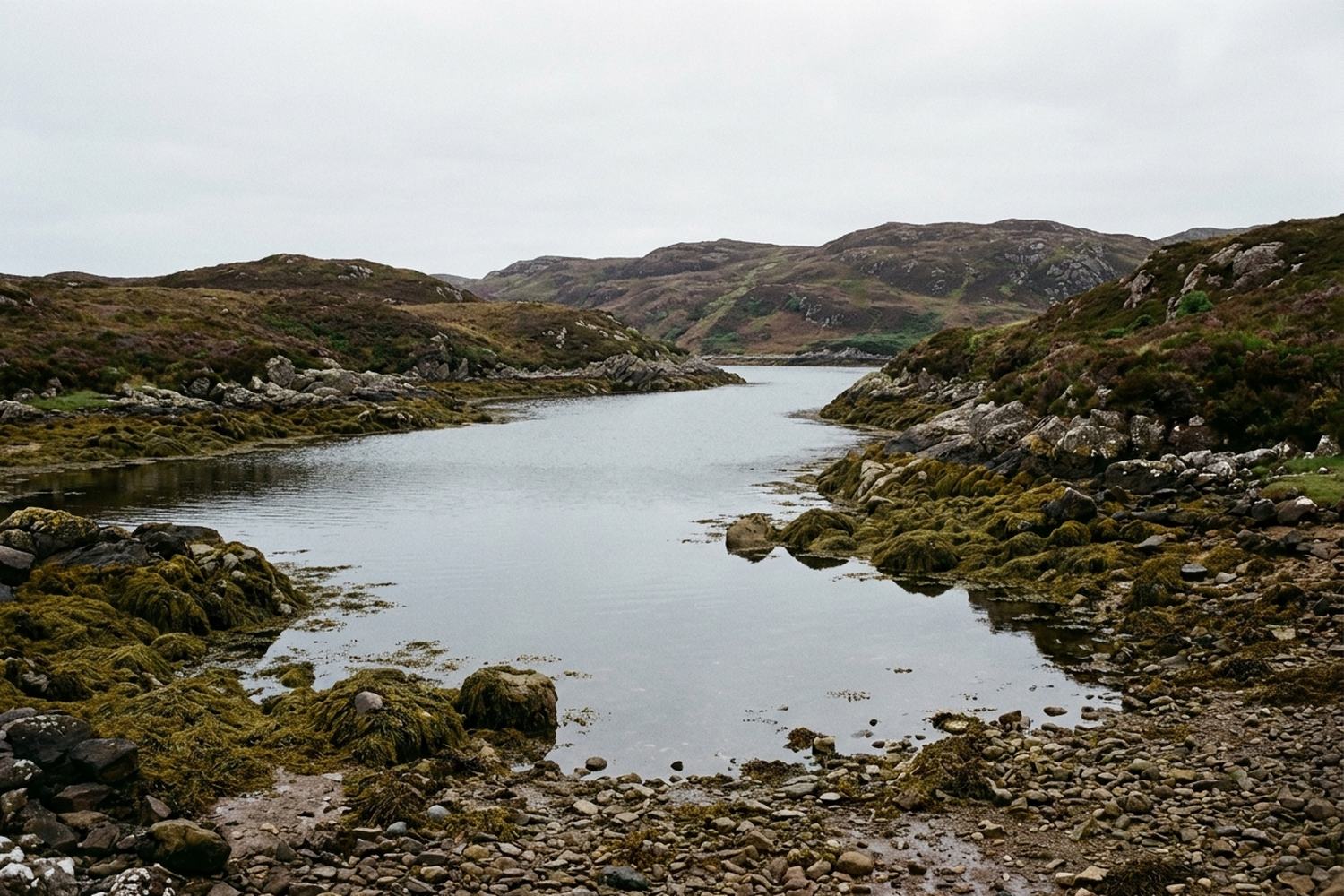
South of town the ground stands up. Storhofdi, the headland at the bottom of the island, is a 400-foot promontory that holds one of the windiest recording stations in the country, and the path out to it is grass over rock with the drop on your right. The sea cliffs on the west side go to over 700 feet in places. Puffins nest in the turf at the top from roughly late April into August, and after that the burrows are empty and the cliffs are just cliffs.
Which months this works in, and which ones will hold you on the mainland
The trip is worth doing from May through September without much argument. Late June gives you light until well past midnight and the calmest water of the year, and it is also when the birds are on the cliffs. September thins the crowds and the sailing still runs most days. October onward, you are booking a trip whose start and end dates are negotiable, and you should book it knowing that.
Winter here is not cold in the way people expect. What it is, is windy and unsettled: the air rarely sits far below freezing, but the swell that closes the harbor comes from storms a long way offshore and arrives on a clear day just as easily as a gray one.
- May
- Sailing runs about 90 days in 100; cliffs filling with birds; ground still bare
- June to August
- Best window; roughly 94 days in 100 sail; average highs in the low 50s Fahrenheit; near-continuous light in late June
- September
- Runs about 88 days in 100; birds gone by mid-month; first real gales
- October and November
- Drops toward 80 in 100; the long route to Thorlakshofn is used often; hold a spare day
- December to February
- Roughly 70 days in 100; closures run in blocks of two to three days; wind above 50 miles an hour is ordinary
- March and April
- Recovering, about 85 in 100; ground bare and clear; light returning fast
What gets fixed when you confirm, and what stays open
We do not sell you a departure time on the crossing, because nobody can. What we fix is the room, the number of island nights, the guided half day, the held mainland night and the price. The sailing itself is booked in your name for a specific day, and the harbor it leaves from is decided the evening before by the operator on the basis of the swell forecast. You are told which one, and you are told again in the morning if it changed overnight.
- ConfirmationRoom, six island nights, guided half day and the held mainland night are locked; you pay the figure quoted and nothing on the crossing is left to settle later
- Two weeks outWe send the sailing card, the drive time to both harbors from Keflavik, and the exact phone number that will tell you which harbor is running
- The evening beforeHarbor is announced; if it has moved to Thorlakshofn, the crossing becomes just under three hours and your arrival day is spent arriving
- If the sea is shutThe held mainland night at Hvolsvollur is released to you and the island nights shift by one; a second closed day is quoted at cost, and the aircraft is checked for seats
Put the hardest question to us first
The one worth asking is what happens if you have a flight home on the seventh morning and the sea is shut on the sixth. Tell us your outbound date when you write, and we will tell you plainly what we would do about it before you pay anything.