Every page on this site can be reached and worked with a keyboard alone, and that is the test the office runs first when anything changes. The rest of this page sets out the specifics, including the parts that are not finished.
What is built into these pages
- Keyboard
- Tab reaches every link, field, button and the five marks in the order they appear on the page. The visible focus ring is a solid outline that does not depend on the page color, and it is never removed on hover or on click. Nothing on this site is a mouse only control.
- Heading order
- Each page has one h1 and the levels below it descend without skipping. The trip pages run h1, then h2 for each part, then h3 for the parts inside. A screen reader listing headings gets an outline of the page, not a list of decorations.
- Contrast
- Text is measured against the actual background it sits on, including text that sits over a photograph, where the reading is taken from the lightest part of the image under the letters and not from a flat sample. Body text clears 4.5 to 1. Large headings and the interface parts clear 3 to 1.
- Alternative text
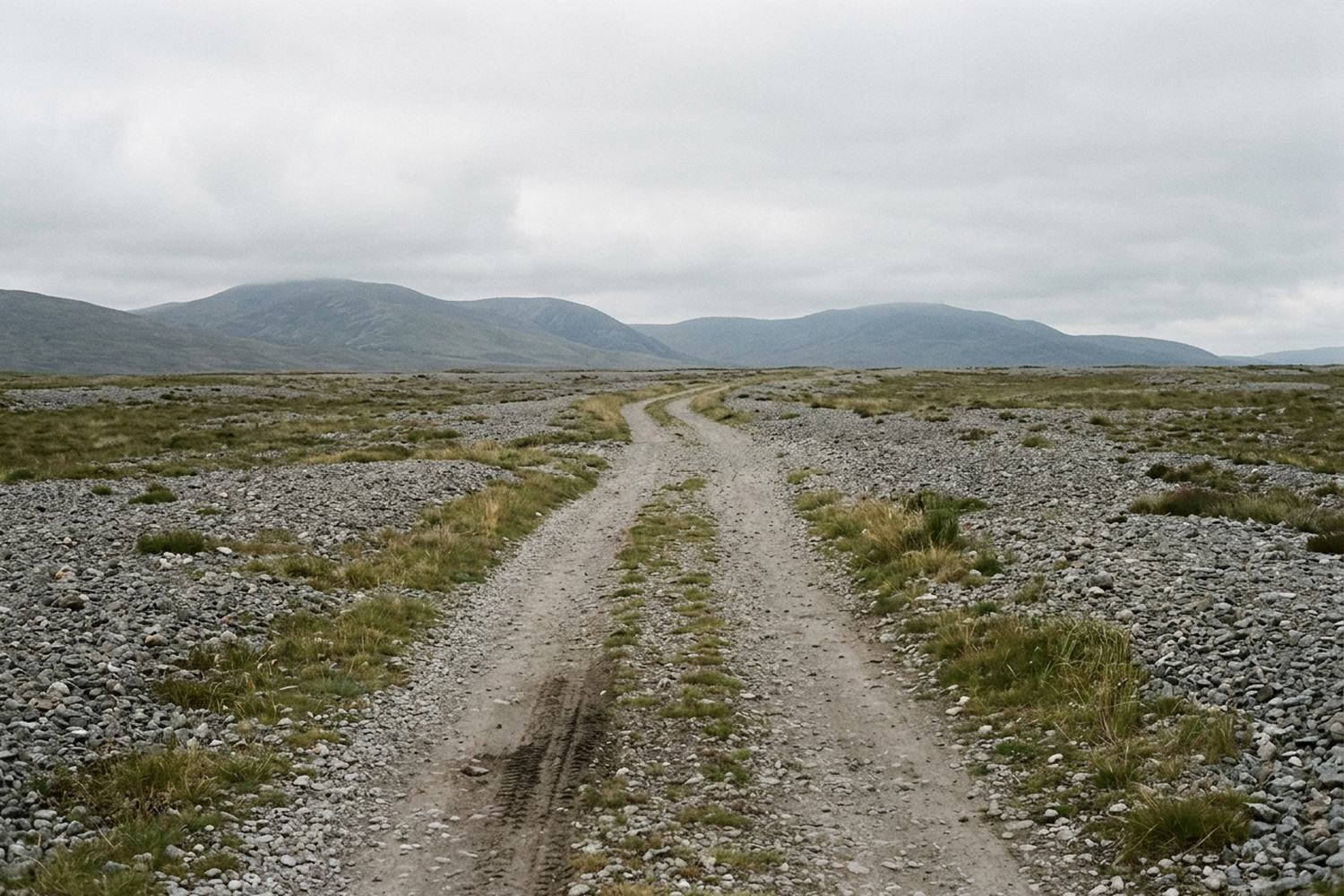
- A photograph that carries information about the ground gets a description of what a walker would see: the surface underfoot, the grade, whether the light is open or under trees. A photograph that is only there to be looked at is marked as decorative so it is skipped rather than read aloud as a filename.
- The five marks
- The five steps of distance from the last road are shown as two identical ticks with a gap between them that widens by step. At the door the ticks touch. At the far end they sit far apart. The gap is the information. It is never a color, never a red to green run, and every mark is also written out in words next to it, so nothing here needs color vision or the ability to compare two shades.
- Arrival
- When a price or a filtered list of trips arrives on the page, it moves in from one side and stops. It does not fade up from nothing, because a fade is unreadable to anyone with reduced contrast sensitivity and it is a hazard to a reader who is sensitive to flicker. Where the browser reports a preference for reduced motion, the movement is dropped and the content is simply there.
- Zoom
- At 400 percent zoom on a narrow window, the page reflows into a single column and nothing needs to be scrolled sideways to be read. Text can also be resized on its own to 200 percent without lines running into each other or buttons swallowing their own labels. Nothing is set in a fixed pixel height that clips when the text grows.
- Fields
- Every field on the quote form and the contact form has a real label that stays visible when the field is filled, not a placeholder that vanishes as soon as you type. Required fields say so in words. An error names the field and says what to do about it, sits next to that field, and is announced rather than only shown. Nothing on either form times out.
Where this site is honestly weak
- Photographs of ground
- Several trip pages lean on photographs to show what a path is like. A written description does real work but it is not the same information, and the office knows it. Ask and a person will describe any path on this site in as much detail as you want, in writing or on the telephone at (918) 496-2748.
- Long pages
- The trip pages are long by design, because the detail is the point. Skip links are in place, but there is no in page contents list yet on the longest of them, so getting from the top to the price still takes more keystrokes than it should. That is being fixed.
- The price table
- Prices and what they include are set out as a table with proper row and column headers. It reads correctly, but on a phone at large text sizes it becomes a tall stack that takes a long time to move through. A shorter reading order for small screens is not built yet.
- Documents
- Anything the office sends you after a request is written in the body of the message. Where a figure has to go out as an attachment, it may not be tagged for a screen reader, and that is a gap. Say so when you write and it will come as plain text instead.
Telling us something is wrong
Write to tideline@driftwoodchronicle.com or call (918) 496-2748. Name the page, say what you were attempting on it, and say what the page did instead. If you know what you are using, browser and screen reader help, but do not spend time gathering that before you write, because a plain sentence is enough to start on.
A note about this page gets looked at before the working day ends. Small things such as a missing label or an unlabeled control are usually fixed within a few days. Bigger things, like rebuilding how the price table reads on a phone, take longer, and you will be told which of the two it is rather than being left with a thank you. If something on this site is stopping you from getting information you want, you do not have to wait for the fix. Write and ask, and a person will send you what you were trying to read.
What the distance steps are and are not
This site files twenty trips by how far each one sits from the last road, from the door itself out to places with no road at all. Those five steps are measurements of ground. They are not measurements of you.
The office does not know what any given person can walk, and it will not pretend to. Nobody here has seen you walk, nobody here knows your knees, your lungs, your balance on loose stone, your history or what a given day costs you. Nothing on this site is a judgment about whether a trip is right for a person, and nothing on it should be read as clearance or as a warning. What we can tell you is what the ground does, and that is the whole of what the steps say: how far it runs, how much it climbs, what it is made of, whether there is anything to hold, whether a wheeled bag can be pulled along it or has to be carried, how wide the path is, where it narrows, and whether a vehicle can turn around at the end of it.
Those figures exist for every trip in the catalog. Ask for any of them and they will be sent, and you will not be asked why you want them. There is no form to fill in first and no explanation owed. You are the only person in a position to read a number about a path and know what it means for you, and the office's job is to hand you the number, plainly and in full, so that you can. Where a figure is not on hand, the office will get it from the company operating the trip and say how long that takes, which is usually two to four working days.
If a trip does not suit and another one might, say so and a person will go through the catalog with you by distance rather than by destination. Prices across the twenty run $1,640 to $3,640 per person, and that range holds whether a trip stops at the door or ends where the road does. What it costs and how far it sits from a road are two separate facts here.