Seven hundred and twenty feet is the whole story of this trip. That is what the track climbs between the lower parking place and the cottage door, spread over a mile and three quarters of laid granite, and it is why the mourne mountains vacation package an hour from a road is the shortest thing in our catalog at five nights and still the one people ask the most questions about. Nobody asks how far. They ask how heavy.
The cottage is stone, two bedrooms, a solid fuel range that also heats the water, and a window that looks down onto a reservoir maybe four hundred yards long with the granite going up dark behind it. There is no road to it. There is a track, made a long time ago for carts hauling stone, and it is a good surface by the standards of these hills, which means it drains and it does not turn to peat soup. It is still wet. Water runs down the ruts most of the year and the polished stone at the two steep bends is slick under a boot sole.
Five nights is short because the walk in and the walk out each eat part of a day, and we would rather price the nights you actually spend there than sell you a seventh that gets swallowed by a flight.
- Step
- An hour on foot , An hour
- How far from the road
- The cottage sits sixty to seventy minutes on foot above the last public parking place, on a made stone track that gains about 720 feet in a mile and three quarters.
- What the distance costs
- The track is quarried granite laid as a cart road, wide enough for two people, wet in the ruts and slick where the stone is polished; it gains roughly 720 feet in a mile and three quarters, which is an empty walk of forty five minutes and a full load walk of sixty to seventy five, longer if you stop to change hands. Bags can go up separately: the cottage owner runs a small four wheel drive to the door on Tuesdays and Fridays only, so one soft bag per person can be sent ahead if your arrival falls on those days, and everything else goes on your back. If the track is closed for forestry felling, which happens for two or three weeks most winters, the alternate approach adds a mile and a half and about 300 more feet of climbing over open ground with no stone underfoot, and we tell you which one is live before you fly.
- Nights
- 5
- From
- $1,980 per person
- Shape of it
- cottage by a reservoir, an hour on a made track
- What is in the figure
- Five nights sole use of the two bedroom cottage; bed linen and towels made up before you arrive; a first stock of firewood, coal and kindling for the range; gas and electric on the meter paid for you up to the fifth night; the door key handover at the parking place; bag transfer for one soft bag per person on Tuesday and Friday arrivals; a printed track description with the felling detour marked; our written figure and booking of the cottage.
- What is not
- Flights and every leg of ground transport including the car hire or driver to the parking place; food and drink for the whole five nights, since the nearest shop is nine miles by road and there is nothing at the cottage but salt and tea bags; a second load of fuel if you burn through the first, sold by the owner at the door; boots, waterproofs, torches and any walking equipment; guided walking or mountain instruction of any kind, which we do not book; bag transfer on any day other than Tuesday and Friday; parking charges at the lower lot; anything you eat or drink away from the cottage.
- Who it does not suit
- Anyone who cannot walk an hour uphill on wet uneven stone carrying their own pack, and anyone traveling with wheeled suitcases, a folding stroller, or more luggage than two hands can hold on a rough surface. There is no vehicle access to the door on demand, no way to send for a car, and no shortening the walk out on the last morning.
Granite, water and a wall you can see from the door
The Mournes are a granite dome about fifteen miles across in the southeast corner of County Down, running from Newcastle on the sea inland to Hilltown. The tops are bare rock and short grass, the flanks are heather and bog, and the whole upper bowl is cut through by a drystone wall better than twenty miles long and in places over six feet high, built across the summits in the early twentieth century to fence the water catchment. From the cottage door you can see a stretch of it climbing a shoulder to the north. It is the best handrail in the range in poor visibility, and in these hills poor visibility is not unusual.
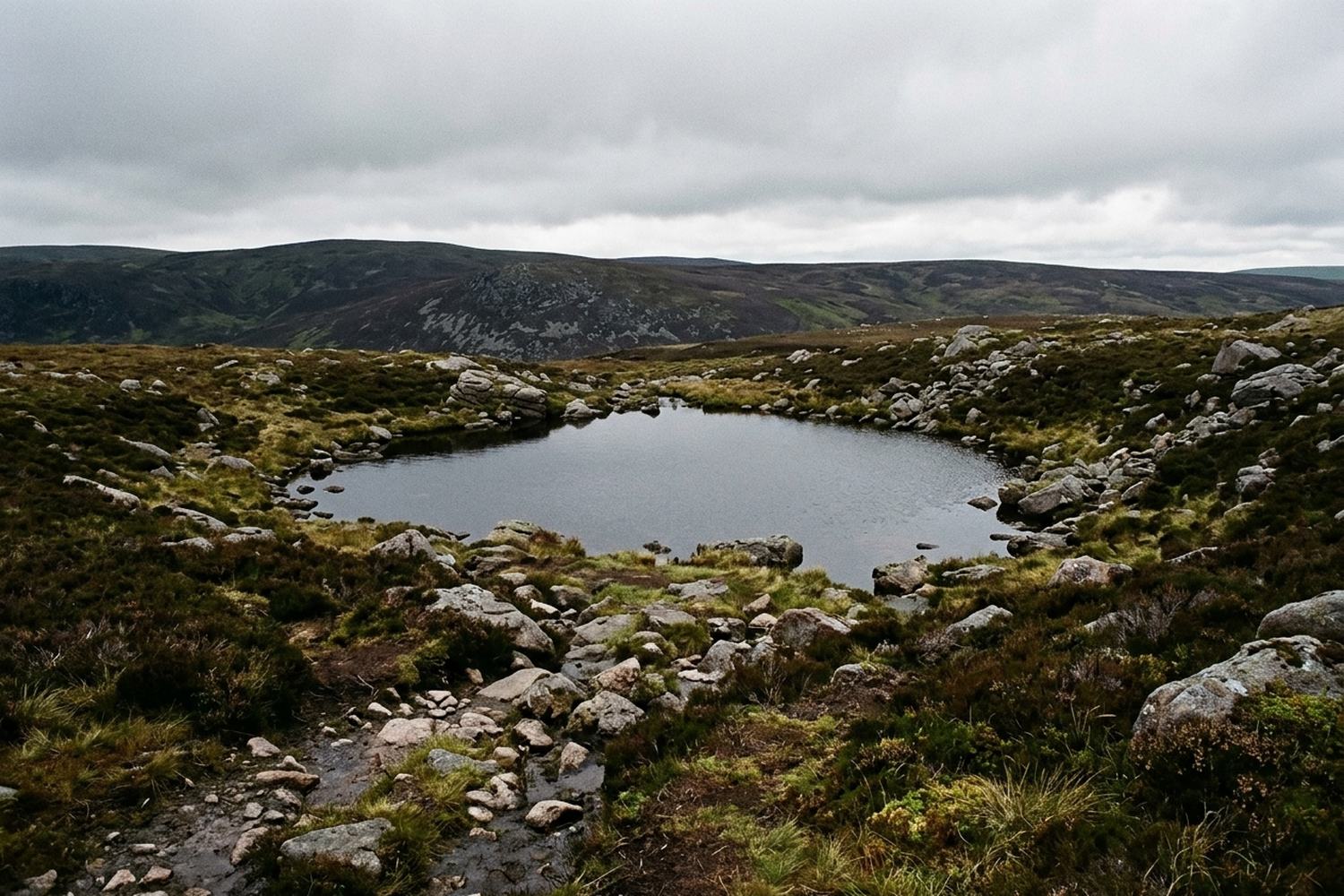
The valley the cottage sits in holds one of the smaller reservoirs, dammed at the low end, dark even in strong light because of the peat. The ground either side of the water is boggy for the first hundred yards, then goes to heather and loose granite blocks the size of a car. Slieve Donard, the high point of the range at 2,790 feet, is roughly three and a half miles away by the ridge, with about 1,900 feet of climbing from the cottage if you go for it. Several of the other tops sit above 2,200 feet and are reachable and back inside a day on foot from the door.
What there is not: any shop, any phone signal worth the name in the valley bottom, any streetlight, and any way to have something delivered. Cell coverage returns on the shoulders about 300 feet above the cottage, which is where people stand to make calls.
When the range works and when the rain wins
Rain here is the ordinary condition, not the exception. The Mournes take somewhere between 50 and 70 inches a year on the high ground, more than the coast a few miles away, and there is no month with a dry guarantee. April through June is the driest run and the longest daylight comes in June, when it is still light enough to walk at ten at night. Winter delivers short days, standing water on the track, and ice on the polished bends.
- April to mid June
- Driest stretch of the year, ground firming, daylight to 9pm and later by June, track in its best condition
- Late June to August
- Warmest, mid 60s Fahrenheit on a good day, midges bad at the water edge on still evenings, more people on the summits
- September to October
- Ground softening, first gales off the Irish Sea, color on the heather, daylight gone by 7pm in October
- November to February
- Track wet end to end, ice on the two steep bends after a cold night, dark by 4:30pm, forestry felling closures fall in this window
- March
- Snow still possible on the tops above 2,000 feet, long clear spells between fronts, track thawing and muddy
What we settle before you commit
We do not take a booking on a description. Before anything is confirmed we tell you the walk in in numbers, which arrival days carry the bag transfer, and whether the track is open or the felling detour is live, because that detour changes the trip materially and you should decide with it in front of you.
- Your messageRead the same working day. We ask which airport you plan to land at, what day you want to arrive, and how many bags per person
- The written figureTwo to four working days. It names the five nights, the cottage, the fuel stock, the meter allowance and the bag transfer days, with the excluded list in full
- Track statusSent with the figure and again in the week before you travel. If forestry work has closed the stone track, you get the detour distance, the extra climbing and a map before you decide
- ConfirmationDeposit to the cottage owner through us, key handover point and time fixed, and a printed track description posted to you
Ask about the carry before anything else
If you want to know whether a particular pack, a particular week or a particular arrival day works with the bag transfer, say so and we will answer with figures rather than adjectives. That is the part of this trip worth getting right.