The tide in this bay moves at roughly the speed of a fast walk across the flattest stretches, and the difference between low and high water on a big coefficient runs over forty feet. Those two numbers are the whole trip. They are why the French state licenses the guides who take people onto this sand, why the route changes shape every few weeks as the Couesnon and the Sée shift their beds, and why a Mont-Saint-Michel bay vacation package with a tidal crossing is priced around one day rather than six.
You sleep on the shore, not on the rock. The village is a working one, nine miles by road from the assembly point at Genets, and the six nights are yours to fill: the crossing takes one of them, a shorter guided walk on the near flats takes half of another, and the remaining four are yours for the coast road, the oyster beds at Cancale, the granite quarries at Saint-James, or sitting still. Arrival day is spent arriving. Rennes to the shore is about ninety minutes by road, Saint-Malo about an hour, and you will not be walking anywhere on sand that afternoon.
- Step
- Half a day in , Half a day
- How far from the road
- The rock itself has a causeway, but this trip does not use it: the booked crossing starts on the sand at Genets and runs four to five hours over open flat, water and mud, with no road, no bench and no way to shorten it once you are past the first channel.
- What the distance costs
- The surface is wet sand, ankle deep silt in the channel beds, and two river crossings where the water sits somewhere between shin and mid thigh depending on the day. Height gained is essentially zero, which fools people; the cost is horizontal and it is the mud, not the miles. Barefoot or in strapped sandals, four to five hours, and with a full daypack expect five. Bags do not come with you at all: your luggage stays in the room at the shore village, you carry water, a windbreaker and a dry pair of socks, and the guide will turn people back at the assembly point if they show up with a suitcase or a stroller. If the tide table, the wind or river spate closes the route, the crossing is moved to another day in your six, and if the whole week closes the crossing fee comes off your final figure and the nights stand.
- Nights
- 6
- From
- $2,890 per person
- Shape of it
- a licensed guide across open tidal sand
- What is in the figure
- Six nights in a shore village room within nine miles of Genets; the guided sand crossing with a state licensed guide, one full day, both directions or a return by road; a second short guided walk on the flats near the assembly point; airport transfer from Rennes or Saint-Malo on arrival and departure; breakfast every morning; tide table and route briefing sent before you fly.
- What is not
- International and domestic flights; lunch and dinner every day of the six, including the food you carry onto the sand; entry to the abbey and to anything else on the rock; the shuttle or the walk along the causeway if you want to visit the rock separately from the crossing; drinks; bicycle or car rental for the days you are not crossing; laundry; anything you buy in the village; gratuities; and any extra night if you decide to stay on after the sixth.
- Who it does not suit
- Anyone who will not walk four to five hours without a seat, a bathroom or a way out, and anyone who needs firm ground underfoot: the channel beds swallow to the ankle and hold, and the guide sets the pace for the tide, not for the group. Small children who cannot walk the whole distance themselves do not go, because nobody can be carried across, and a wheeled anything is refused at the assembly point.
What the sand is actually made of
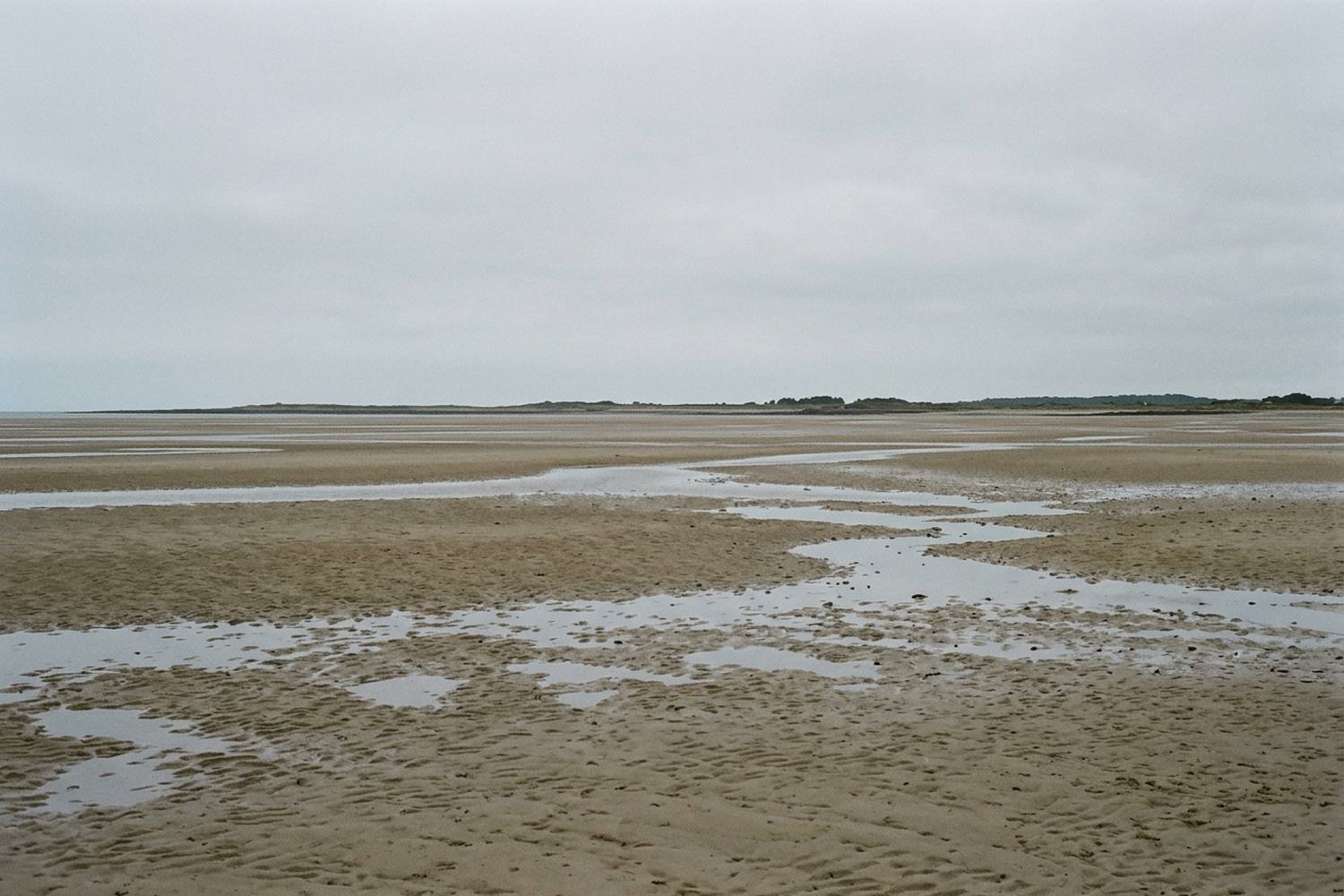
The bay drains to roughly eleven miles of exposed flat at low water on the biggest tides. It is not beach. Most of it is fine gray sand packed hard enough to run on, cut across by three rivers that braid and rebraid themselves, and it is at the edges of those channels that the ground turns. Quicksand here is not the pit from films: it is a patch of sand held in suspension by upwelling water, usually a few feet across, and it takes you to the knee or the thigh with no warning underfoot. It lets go if you sit back and work the leg loose slowly. The guides know where the patches sit this month because they walk it constantly, and that knowledge has a shelf life of weeks.
The rivers are the second thing. The Sée and the Sélune come down from the bocage and the Couesnon runs out under the rock, and each has to be forded on foot. Water depth on a normal crossing day is shin to mid thigh, cold, moving, and with a bed that gives. The guide picks the ford on the morning, not the week before.
Fog is the third. It comes off the water and settles flat, and on the sand there is no landmark at all except the rock itself. That is exactly the condition in which a crossing gets canceled the night before, and it happens.
Months that work and months that fight you
Water temperature and daylight, not sunshine, decide this. April through October is the working season. The big spring tides around the equinoxes give the widest sand and the longest exposed window, and they also bring the fastest returning water; the guides plan around them rather than avoiding them. July and August are warm on the flat and busy on the rock, and the sand still drains cold.
November through March, crossings run only on selected days and often not at all. Wind over about twenty five miles an hour off the sea, river spate after inland rain, or fog will close the route regardless of month.
- April to mid June
- Cold water at the fords, long light, thinnest crowds on the rock, sand at its firmest after winter
- Late June to August
- Air in the seventies, water still cold underfoot, most crossing dates available, rock at its busiest
- September to October
- Big equinox tides, widest exposed flat, wind picks up and cancels more days
- November to March
- Few crossing dates offered, short daylight, water in the forties, most weeks unavailable
- Any month, after heavy inland rain
- Rivers run high and fast, fords move or close, crossing slides to another day in your week
- Any month, sea fog
- Canceled the evening before, no visual reference on open sand
What gets fixed before you pay anything
The crossing date is chosen first and everything else is built around it, because the tide table decides and nobody negotiates with it. We hold two candidate dates inside your six nights, so a closure on the first still leaves a working second.
- Message readRead the same working day, with the tide coefficients for your window and which days can carry a crossing
- Figure sentTwo to four working days: the full per person figure, the two candidate crossing dates, the shore village and the transfer times
- You confirmThe guide place is reserved for the primary date, the room is held for six nights, the secondary date stays open at no extra cost
- Before you flyRoute briefing, tide table, what to wear on the sand and what will be refused at the assembly point
Ask about a date before you look at flights
Tell us the month you are thinking about and we will send back the days inside it that can actually carry a crossing, along with the figure. That way the tide picks your dates rather than an airfare doing it.