Eighteen feet. That is the distance from the driver's door to the boot room step, measured on the gravel, and it is the whole reason this week exists in the catalog. A herefordshire vacation package with the car at the door was the first thing we ever filed under the shortest band, and six years of sending people there has not turned up a reason to move it. You drive off the lane, over the cattle grid, up a track that gains forty feet in half a mile, and you stop. Nobody carries anything anywhere.
The house is stone, three hundred years of it, with a slate roof that was redone recently and a boot room that was clearly built by somebody who understood mud. Four bedrooms, six beds, two of them downstairs. Oil fired heating that actually keeps up, a woodburner in the sitting room and a load of seasoned ash split small enough to light in one go. The kitchen has a range that takes forty minutes to come up to temperature, which nobody tells you and everybody discovers on the first night.
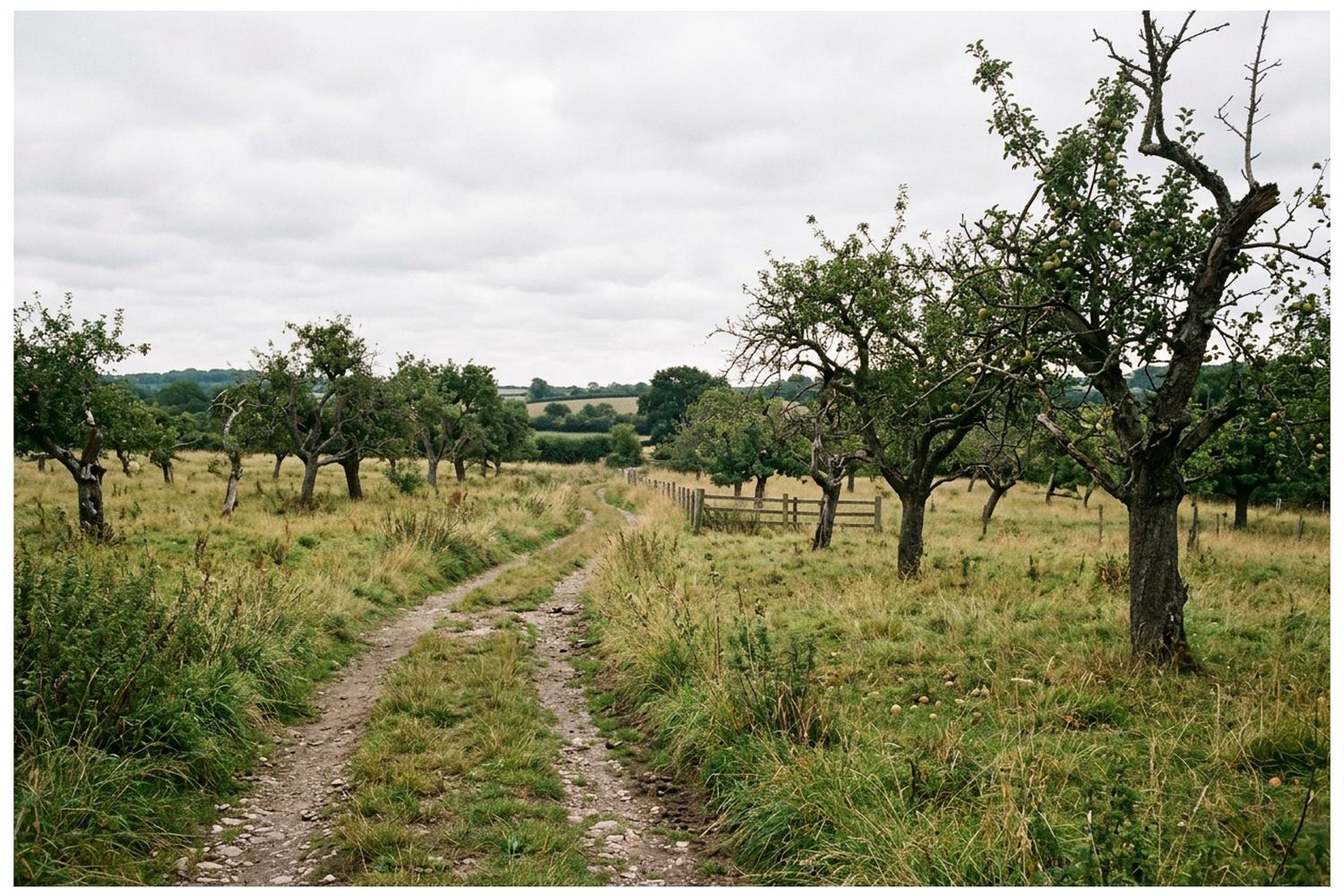
What surrounds it is about nine acres of standard orchard, not the modern bush kind, planted in the nineteen thirties and still cropping. Bittersweet cider apples mostly, the sort that are inedible raw and taste of tannin and hay. Sheep graze under them from September. The Wye is a mile and a quarter down the hill and you hear it in flood.
- Step
- The road reaches the door , At the door
- How far from the road
- Zero feet from the last road: the farm track is the last road, it ends at the house, and the car sits about eighteen feet from the kitchen door.
- What the distance costs
- The cost of the distance here is almost nothing, which is the point. The last half mile is a private track of rolled stone and compacted marl, single width with two passing places, no gate to open, and it climbs about forty feet from the lane to the yard. Bags travel in the car and come out of the car; the longest carry is boot room to first floor bedroom, fourteen stairs with a turn, and two of the six beds are on the ground floor if you would rather not do the stairs at all. A full load takes one trip and about four minutes. What closes here is not the track but the ford on the low lane below the orchard: after heavy rain it runs eight to fourteen inches deep and the county closes it with a barrier, which adds four miles and about eleven minutes on the ridge lane. In November through March the track itself turns to surface mud over the stone; a two wheel drive car makes it, but it will not look clean afterward, and we tell people that before they book rather than after.
- Nights
- 6
- From
- $1,890 per person
- Shape of it
- self catering farmhouse, your own car
- What is in the figure
- Six nights sole use of the farmhouse, sleeps six, four bedrooms; heating oil, logs for the woodburner and electricity with no meter to feed; final clean and all linen and towels; a chilled starter box on arrival with local bread, butter, eggs from the yard and a bottle of single variety cider; parking for three cars on the gravel; one arranged half day at a working cider press twelve miles off; a mapped set of eleven walks from the door with gradients and gate counts written out; our number for the whole week, answered by the person who booked you.
- What is not
- Flights and all transatlantic travel; the rental car, its fuel, its insurances and any young driver or additional driver charges, which you arrange yourself; every meal except that first box; restaurant and pub bookings, which we will make for you but not pay for; entry to the cathedral treasury, the castle gardens and any paid property on your list; the cider press session for anyone beyond the four places held; dog charge if you bring one, settled with the owner; a firewood top up if you burn more than the delivered load in a cold week; travel protection of any kind, which we do not sell or advise on; anything you buy at the farm gate honesty box.
- Who it does not suit
- People who want mountains, coastline or a big view will find this flat and green and be bored by Wednesday. It is a car week: without a vehicle you are two and a half miles from the nearest shop and there is one bus on Tuesday and Friday. And if the idea of a track that leaves mud on the sills between November and March is going to annoy you, book May instead of February.
Red soil, old orchards, and a river that decides things
The ground here is Old Red Sandstone and it is genuinely red, so red that the plow lines look like rust from the ridge above the house. It drains reasonably in summer and holds water like a sponge from late October. That single fact governs the whole week: which walks work, whether the ford is open, whether the field gate at the bottom of the orchard is worth crossing or whether you take the metaled lane instead.
The county is famous for black and white villages, which is not a marketing phrase but a construction fact: oak frames infilled with lime plaster, painted in the Victorian period in the two tone scheme that stuck. Weobley, Pembridge, Eardisland and Dilwyn sit in a loop of about seventeen miles and you can do the whole run in an afternoon with three stops. The church at Kilpeck, twenty two miles south, has a carved Romanesque doorway from around 1140 with the sculpture still crisp because the sandstone there happens to be a harder bed than the local stuff.
Walking from the door is undramatic and pleasant. The eleven routes we write out for you run from one and a half miles to nine, and the biggest climb on any of them is four hundred and thirty feet, up onto the ridge with a view over the river toward the Black Mountains on the Welsh side. Stiles rather than gates on three of the routes, which matters if anyone in the party does not fancy climbing over things; the notes say which. Underfoot it is pasture, farm track and about a mile of lane, and between November and March a good deal of it is ankle deep clay that pulls your boot off if you are careless.
The months that work and the two that do not
May and September are the two we push hardest. May because the orchards are in blossom for roughly two weeks somewhere between the tenth and the twenty fourth depending on the spring, and September because the fruit is going in and the presses start running. July and August are green and warm and slightly dull; the hedges are high enough that you lose the views from the lower footpaths entirely.
Winter is honest rather than pretty. The house is warm, the woodburner earns its keep, and there are four or five good days in a fortnight. The rest is gray, wet and dark by half past four, and the tracks are mud. We will book it if you want it, at the same figure, but you should know what you are buying.
- Mid April to late May
- Blossom in the standard orchards, roughly two weeks of it, ground firm, lanes dry, longest daylight run of the spring
- June to August
- Warm, high hedges, views closed in from the low paths, busiest on the village loop, temperatures usually in the sixties and low seventies
- September to late October
- Fruit going in, presses running, ridge visible again as the hedges are cut, best month of the year for this house
- November to March
- Surface mud on the track and on eight of the eleven walks, ford closes after heavy rain, dark by four thirty, house itself unaffected
- Late December
- Bookable but the village pub closes for ten days and the shop keeps short days, so plan the food run before you arrive
What we settle before you have paid anything
Nothing about this trip is complicated, but four things get pinned down in writing before a figure is confirmed, because they are the four that cause trouble later. Send us the dates and the party size and we will come back with the numbers in two to four working days; a message on any other question is read the same working day.
- Your note to usDates, how many of you, whether anyone wants a ground floor bedroom, and whether a dog is coming. We check the farmhouse calendar and the state of the track for that month
- The figureWritten out per person, six nights, with the rental car sized to your luggage and the two Heathrow or Birmingham arrival options priced separately so you can see the difference
- What you confirmBedroom allocation, the arrival window with the owner, the cider press date if you want it, and your food run plan for the first evening
- Papers before you flyDirections written for the last four miles because the phone signal drops on the ridge lane, the ford's alternative route drawn out, the owner's mobile number, and the walk notes with gradients and stile counts
Tell us what you actually want from the week
If you want to know whether the range will cook a proper dinner, whether the ford will be open in your week, or whether nine acres of apple trees is enough to fill six days, ask. We have been to the end of that track more times than is reasonable and we would rather talk you out of it now than have you bored on Wednesday.