included: Six nights in the stone house, sole use, self catering; bed linen and blankets; wood for the stove and cooking gas; solar power to two lights and one socket; drinking water hauled by the caretaker from the spring twice in the week; a meet at the village square and the walk in with a local guide on day one; a printed sketch map of the four walking lines from the door; the muleteer's two panniers up on arrival day.
excluded: All flights and the drive from Madrid, about two and a half hours; parking at the road head; all food and drink, which must be bought in the valley before you walk up; the muleteer's return trip down at the end of the week, quoted separately because most people walk out light; any guiding after day one; laundry, which there is none of; refrigeration, of which there is a cold larder and no more; cell service, which is absent from the house and patchy on the ridge; any transfer of a person, as opposed to a bag, by animal.
unsuited: Anyone who will not carry a loaded pack uphill for an hour, twice. Anyone bringing a wheeled suitcase, a stroller, or a dog that cannot manage rough granite steps. Anyone who needs to drive to the door, needs mains power, or needs to reach a car at short notice, because the walk out is the only way out and it takes the same hour in the dark.
---
Nineteen hundred feet below the house, in the valley, there is a bar with a fridge and a road. Above the house there is granite for another 2,900 feet, up to Almanzor at 8,504. The house sits on the ledge between the two, and the only thing connecting it to the road is a mule track that was there before anyone thought of vacations. A sierra de gredos vacation package an hour on foot means precisely that: sixty minutes, give or take, with everything you intend to eat for six days either on your back or on a mule.
This is the Sierra de Gredos, the granite range about two and a half hours west of Madrid, and it is not a soft landscape. Oak scrub to about 5,000 feet, then broom, then bare rock and glacial cirques above. The stone house is a shepherd's building, two rooms and a loft, walls three feet thick, a stove, gas rings, solar panels feeding two bulbs and one socket. It sleeps four properly and six if two people are content on the loft floor.
People underestimate one thing, and it is not the climb. It is the heat on the way up. The lower half of the track faces south and holds no shade until the oaks close in at about twenty minutes. In late June a walker starting at two in the afternoon is climbing in 95 degrees with no water on the route, because the streams that make this place green in May are dry by the first week of July and stay dry until the fall rain.
- Step
- An hour on foot , An hour
- How far from the road
- One hour up a stone mule track from the highest place a car can be left, 1.9 miles of walking and 1,180 feet of climb, with no vehicle access to the house in any season and no way to shorten it.
- What the distance costs
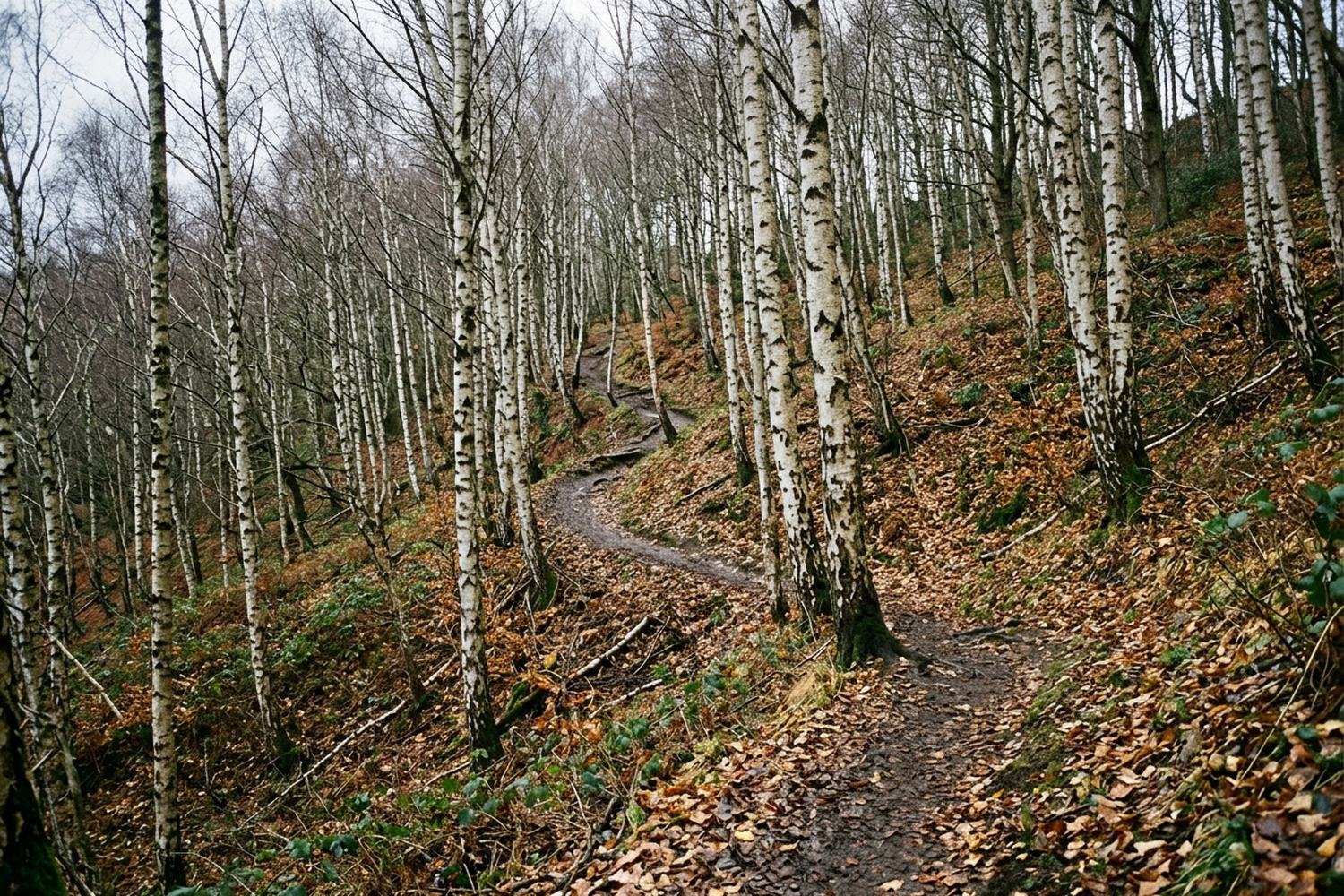
- The track is granite: laid slabs for the first third, then loose decomposed granite over bedrock, then slabs again through the broom. Height gained is 1,180 feet in 1.9 miles, steepest in the middle twenty minutes where it steps rather than climbs. Empty, a walker who moves steadily does it in fifty five minutes; with six nights of food on your back, count ninety minutes and one long stop. Bags can travel another way: a muleteer working out of the village takes panniers up on two animals, one trip, at a fixed figure quoted with your confirmation, and he goes up at nine in the morning only, so a late arrival means your bags sleep in the village. The track does not close for weather but it changes: in June and September afternoon heat on the exposed lower half is the reason people arrive wrecked, and the sensible answer is to walk it before ten or after six. Snow lies on the upper third from roughly late November into March, and when it does the muleteer stops going, so the whole load goes on your back or the week is not bookable. If the mule handler cancels for animal reasons, we call you the same working day and you decide: carry it yourself in two trips or move the dates.
- Nights
- 6
- From
- $2,180 per person
- Shape of it
- stone house, an hour up through oak and broom
Granite, broom and the water question
The rock here is coarse pale granite, weathered into rounded slabs and grit. It is grippy dry and greasy after rain, and the loose middle section of the track behaves like ball bearings on the way down when you are tired. The path is not exposed anywhere. There is no drop off it and no scrambling on it. It is simply steep and stony, and it is the same hour whether you find that easy or hard.
Water governs everything above the treeline. The stream three minutes from the door runs hard through May, thins through June and by mid July is a chain of pools, then nothing. The house takes drinking water from a piped spring further round the shoulder, which the caretaker walks in twice during your week in twenty five liter carriers. Washing water comes from a butt. Nobody showers with a hose here in August.
From the door, four walking lines start without any further driving. The cirque walk is about three hours round with 1,400 feet of climb to a glacial lake. The ridge line east is five hours and 2,100 feet. There is a short one, forty minutes, to a fold in the rock where the shepherds still bring animals in June. And there is the long one up toward Almanzor, which is a full day, 3,000 feet of ascent from the house, and a great deal of it on boulders rather than path.
The year, month by month, and the two months this does not work
May and early June are the green weeks: streams full, broom in yellow flower, night temperatures around 40 degrees at the house and a stove worth lighting. From mid July the ground is brown, the streams are gone, and the walk in is a heat problem rather than a distance problem. September and October give back the cool without giving back the water. Winter closes the mule and leaves you the whole load.
- Late April to mid June
- Streams running, broom in flower, days 60 to 75 degrees, nights near 40, walk in comfortable at any hour
- Mid June to mid July
- Streams thinning fast, afternoons 85 to 95 degrees on the exposed lower track, walk in before ten in the morning or after six
- Mid July and August
- Streams dry, no shade on the lower half until the oaks, house cool inside all day, we book this week only for people who will start the walk at first light
- September and October
- Cool and stable, days 60 to 70 degrees, no surface water, the best month for the ridge lines
- Late November to March
- Snow on the upper third, mule stops, entire six days of supplies goes on your back, and the week is bookable only on that basis
What gets fixed when you confirm
Confirmation locks four things: the house for the exact six nights, the walk in time on day one, the mule for your panniers, and the caretaker's two water runs. The pannier weight limit is the number people ask about last and should ask about first, so it is stated on the confirmation in pounds, not in bags.
- Message inWe read it the same working day and ask three questions: your dates, how many of you, and how much each person is willing to carry
- Figure outA written price for your party, two to four working days, with the mule quoted as a separate line so you can see what it costs to not carry your food
- You confirmHouse, walk in time, mule at nine in the morning on arrival day, and the caretaker's water schedule are all fixed together, and we send the shopping list for the valley
- Week beforeWe confirm the road head parking spot, the meeting place in the village square, and the snow position if you are traveling outside the green months
Ask about the load before you ask about the price
If you tell us what you are prepared to carry up 1,180 feet, we can tell you honestly whether this house works for you or whether one of our shorter walk in trips is the better fit. Send the dates and the number of people and we will put a figure together.