The Curonian Spit is 61 miles long and at Nida it is under two miles wide, so you can walk from the lagoon shore to the Baltic surf in twenty five minutes and hear both from the middle. Lithuania holds the northern 32 miles of it. The rest is Kaliningrad, and the border across the sand has been closed to this itinerary for years, which is why a curonian spit vacation package arrived at by water is not a phrase we chose for effect. There is genuinely no other way in.
Nida sits about 30 miles down the spit from the ferry ramp. The whole of that 30 miles is one road with pine on both sides and no town worth the name until you get there, which is a thing worth knowing before you decide the shuttle is an inconvenience. The permanent population of the settlement is somewhere near 1,200. In August it takes several thousand more. In late October it is 1,200 again, half the kitchens have closed for the year, and the wind does not stop.
We book six nights because five is not enough to absorb one weather day and seven starts to feel like waiting. The price floor holds two rooms in a wooden house four streets back from the lagoon, and it is a house, not a property with a front desk, which means the woman who runs it answers her own door.
- Step
- No road at all , No road
- How far from the road
- There is no road onto the Lithuanian half of the spit at all: the land connection runs through Kaliningrad, so every arrival crosses the Klaipeda strait by ferry, and once across you stay across.
- What the distance costs
- The crossing is 400 yards of open water and takes seven minutes, but the timetable is the whole cost: the passenger boat runs roughly every half hour through the day and thins out sharply after dark, and it is held in the harbor when the strait blows over about 35 mph, which happens on perhaps four to six days between October and December. Bags travel with you on the deck, which is flat, and there is no lift and no stairs at either ramp, so a wheeled case rolls on and rolls off. On the far side the booked house is a further twenty five minutes by the shuttle that meets the boat, and no vehicle of yours goes across; the vehicle ferry is a separate hull, a separate line, and we do not book it. If the strait closes on your arrival day you sit in Klaipeda until it reopens, which is usually the same day and occasionally the next, and the house is held either way at no extra charge because it was paid for the night, not for your presence in it. If it closes on your departure day you miss the flight, so the return is built with a night in Klaipeda before it.
- Nights
- 6
- From
- $2,960 per person
- Shape of it
- ferry, then no road for the last stretch
- What is in the figure
- Six nights in a booked wooden guest house in Nida, two rooms of the four in it held for your party; all ferry crossings for the party, foot passenger, with the shuttle that meets the boat; a half day walk on the Parnidis dune with a local naturalist who works in Lithuanian and English; one lagoon crossing by open boat to the reed beds on the east shore; breakfast every morning at the house; bicycles for the six days, one per person, with panniers; all bookings, the written schedule and the ferry contingency plan
- What is not
- Flights to Palanga or Vilnius and the ground transfer to Klaipeda harbor; the pre departure night in Klaipeda, which we hold but do not price into the floor; lunch and dinner every day, of which there are about eleven meals, and Nida runs perhaps six kitchens in November; the national park entry fee, paid on the spit; the vehicle ferry if you insist on bringing a car, which we will not arrange; birding optics; laundry; any second walk with the naturalist; anything bought on the mainland during a weather hold
- Who it does not suit
- Anyone who needs to keep a car with them, since no vehicle of yours crosses and the spit is worked on foot and by bicycle. Anyone who cannot spend six days on loose sand: the Parnidis approach gains about 170 feet in half a mile of it, and sand that steep takes roughly twice the time it looks like it should. Anyone whose return flight cannot absorb a lost day if the strait blows shut.
What the ground is actually made of
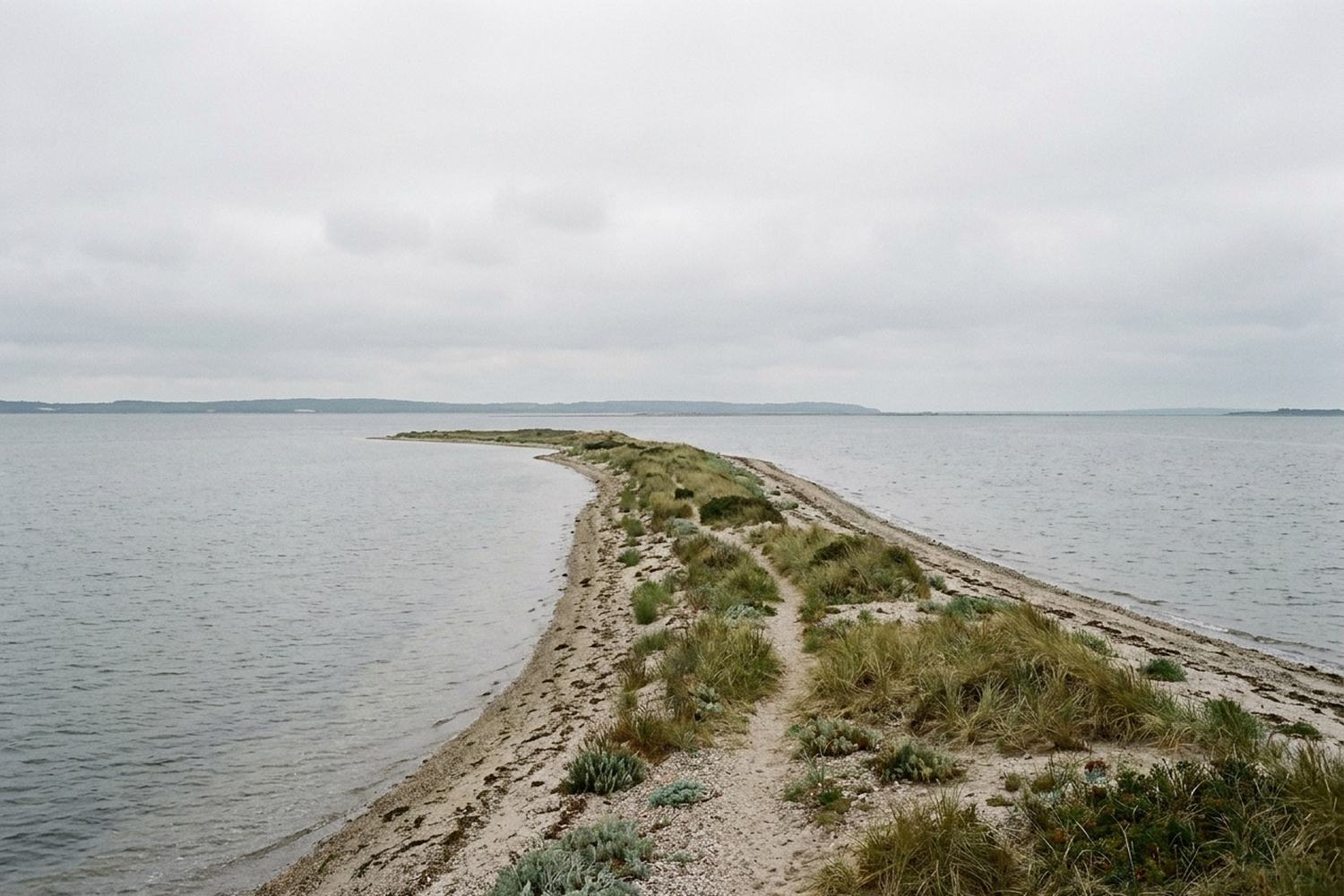
Sand, and then more sand. The Gray Dunes south of Nida are the exposed part: about 60 feet of loose sand on the move with nothing growing on it, held down nowhere, moving east at something like three to twelve feet a year. The pine forest that covers most of the spit was planted from the 1800s onward precisely because the dunes had already buried four villages, and the planting is why there is a spit left to visit. You can still see the older sand under the trees where the roots have not closed over.
The Parnidis dune above the settlement is the one you climb. It is about 170 feet above the lagoon and the walk up from the town side is boardwalk for the first third and then loose sand on a slope steep enough that your heel slides back a few inches with every step. Empty, it is twenty minutes. With a camera bag and a coat, thirty five. The sundial at the top is a granite column that was knocked down by a storm in 1999 and put back shorter, which tells you what the wind does here when it decides to.
The Baltic side is a beach with an offshore bar and no shelter of any kind. The lagoon side is shallow, brackish, three to twelve feet deep across most of its width, and it freezes in a hard winter. Between the two, the pines take the wind off you completely, so you can walk from a 30 mph gust into total stillness in ninety seconds.
The months this works, and the months it does not
Autumn is the reason to come. The spit sits on the eastern flyway and the migration over it runs from late September through the first half of November, with the heaviest passage usually in the second and third weeks of October: chaffinches, thrushes, geese, cranes moving down the length of the sand in numbers that are difficult to describe without exaggerating, so we will not try. The ringing station at Ventes Ragas across the lagoon has been counting them since the 1920s.
Wind is the constant. Average sustained speeds on the outer coast run around 13 to 18 mph most of the year and higher from November, and that is the average, not the gust. Daytime temperatures in October sit in the low to mid 50s Fahrenheit and drop into the 40s by the second week of November.
- Late September to mid October
- Migration building, kitchens still open, air in the mid to high 50s, ferry holds rare
- Mid October to early November
- Peak passage and the season we book by default; low 50s, wind steady, one or two ferry holds likely
- Mid November to December
- Cold, dark by four in the afternoon, most of Nida shut, strait closures four to six days in the stretch
- January to March
- Lagoon can freeze, ferry runs a reduced pattern, we do not book this trip
- April to May
- Return migration and empty sand, but the kitchens are still closed and the wind is at its worst
- June to August
- Warm, ferry queues long on the vehicle side, Nida full; nothing here worth the crowding
What is fixed before you pay anything
Nothing is confirmed on a phone call. Everything you agree to is written down and sent to you first, because the ferry contingency is the part of this trip that people forget they agreed to until the strait is closed and they are standing in Klaipeda with a bag.
- You send the dates and the party sizeWe check the house against them and quote the whole figure, including the Klaipeda night, within two to four working days
- You read the written scheduleIt names the house, the room count, the shuttle times against the boat timetable, and exactly what happens on a closure day
- You confirm and pay the depositThe house and the naturalist are booked in your names; the ferry is not booked, because foot passengers are not booked, they board
- Four weeks outWe send the final schedule with the current timetable, the shuttle contact and the walk time to the house from where the shuttle stops
If you want to know whether the dates work
Send us the window you are looking at and how many of you there are. We will tell you what the passage is usually doing in that week, whether the house is free, and what the whole figure comes to.