Inis Mor is nine miles long and never more than two miles wide, and there are roughly 1,500 miles of dry stone wall on it. That figure gets repeated because it is close to true and because it explains what you will actually look at for six days: a grid of walls thrown up over bare rock, each one built from what came out of the field beside it. An aran islands vacation package reached only by boat is the whole shape of this trip, and the boat is the part that decides everything else. Forty minutes from Ros a Mhil in County Galway, deck passage, and no vehicle of yours makes the crossing.
The price floor of $3,060 per person covers six nights and both sailings. It does not cover the flight to Ireland, and it does not cover the food, which on the island means one small shop in Cill Ronain and a second smaller one out east. People underestimate that. The first thing most arrivals do is walk to the shop with an empty rucksack.
The house is a two bedroom stone cottage near Cill Einne, four miles from the pier, with a turf basket that gets restocked and a kitchen that works. It is not on a road you would drive a rental down, and you will not have one.
- Step
- No road at all , No road
- How far from the road
- The house sits on Inis Mor with no road link to the mainland at all, so every arrival and departure is a sailing of roughly forty minutes from Ros a Mhil that somebody else schedules and the Atlantic can close.
- What the distance costs
- You walk your bags from the pier at Cill Ronain to the vehicle that meets the sailing, about 120 yards on wet concrete and cobble; from there it is a four mile transfer on a single track lane with passing places, and the house door is at the end of a 40 yard gravel path with one step. Total height gained from pier to door is under 60 feet. Bags travel with you on the boat, stowed on the open deck under a tarpaulin, and there is no separate freight run for luggage on the passenger sailings, so a single duffel or a case you can lift over a coaming is the practical limit. If the sailing is canceled, the day is spent on the mainland: we hold a Ros a Mhil area room on your arrival date at our cost and move the island nights back, and if the return sailing is canceled we do the same on the island end and move the flight. Cancellations cluster in the winter half of the year and are printed by month below rather than described as unusual.
- Nights
- 6
- From
- $3,060 per person
- Shape of it
- ferry only, no vehicle to the house
- What is in the figure
- Six nights in a two bedroom stone house near Cill Einne with linen and a stocked turf basket; return deck passage on the scheduled passenger sailing from Ros a Mhil with the bag allowance printed above; pier transfer both ways timed to the sailing you are booked on; a half day walking route across the western pavement with a local guide, on foot, no vehicle; two bicycles for the full six days with a spare tube and pump; a written arrival sheet with the shop, the pier office and the transfer numbers; one mainland contingency night held on your arrival date if the crossing is canceled.
- What is not
- Flights to Ireland and any onward domestic flight; ground transport between the airport and Ros a Mhil; the airstrip alternative if you choose to fly to the island rather than sail, which is a separate booking and is not part of this price; all food, groceries and drink, including the first shop after you land; the entry charge at Dun Aonghasa; boat trips to Inis Meain or Inis Oirr on the interisland sailing; any second or third contingency night beyond the one held, whether caused by weather or by a missed connection on the mainland; laundry, bicycle repairs beyond the spare tube supplied, and any taxi called outside the booked transfers; gratuities.
- Who it does not suit
- Anybody who needs a car at the door on the island, because there is no vehicle of yours on Inis Mor and the transfer runs to the boat and nothing else. Anybody who cannot carry their own bag 120 yards on a wet pier or lift it over the deck coaming without help. Anybody who cannot absorb an extra night at either end, since the sailing window is set by the sea state and not by your calendar. The walking on the pavement is over fissured limestone with gaps of four to eight inches underfoot and no made path, and the bicycle is the main way around a fourteen square mile island, so a trip that must not involve either is the wrong trip.
Limestone that drains before the rain stops
The rock is Carboniferous limestone laid flat, and it behaves in ways that catch people out. Rain hits the pavement and is gone inside an hour, straight down through the grikes, which is why there are no streams on the island and why the wells matter. It also means the surface is dry within minutes of a shower and slick as glass while the shower is still falling. Those two facts arrive back to back all week.
The grikes themselves are the fissures between blocks of pavement. On the western side above Dun Aonghasa they run four to eight inches wide and can be two feet deep, filled with ferns and gentians in May. There is no made path across that ground. You place your feet, one at a time, on blocks the size of a tabletop, and it is slow. Half a mile of it takes forty minutes with a day pack.
Dun Aonghasa sits on a cliff at 300 feet, and the fort is a semicircle because the other half fell into the Atlantic at some point nobody has dated properly. The walk up from the visitor center is about 130 feet of ascent on a stone track, ten to fifteen minutes. There is no barrier at the cliff edge, which is a fact about the place and not a recommendation either way.
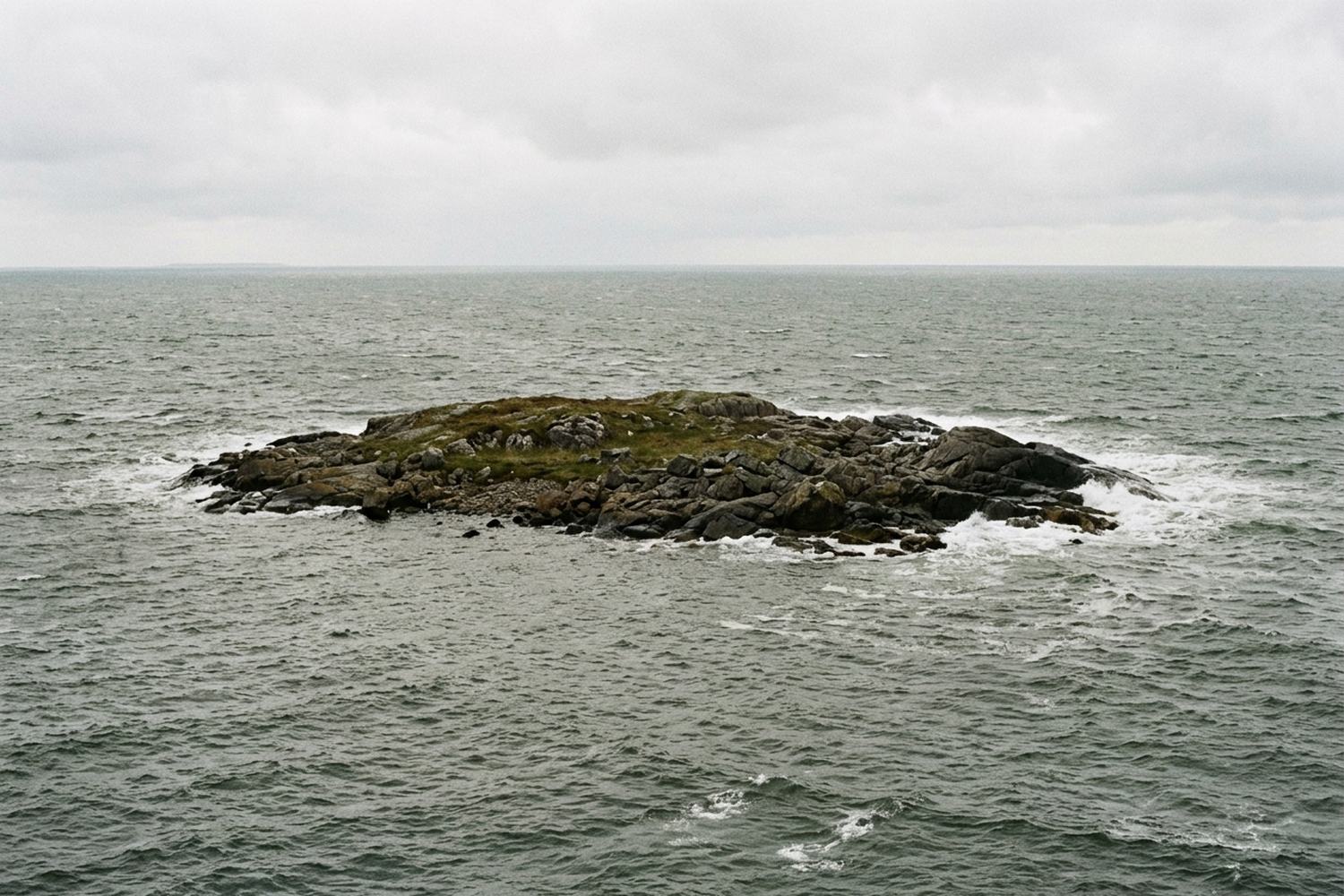
The months the sailing actually runs, and the months it does not
The crossing from Ros a Mhil is short but it runs across open Atlantic water with nothing west of it until Newfoundland, and the deciding factor is swell rather than wind speed alone. A steady southwesterly of 25 knots with a long period swell will stop a sailing that 35 knots of northerly would not. The operator makes the call in the morning, usually by seven, and it holds for the day.
What follows is the pattern by month rather than a promise. We book June through September when a traveler has a fixed return flight, and we say so plainly.
- May and June
- Longest settled spells of the year, gentian and orchid on the pavement, sailings canceled on roughly one day in twenty
- July and August
- Warmest air, mid 60s Fahrenheit by day, busiest sailings, cancellations around one day in twenty five but boats fill and the later crossing can be the only space
- September and early October
- Air still mild, first Atlantic swells arrive, cancellations rise to about one day in ten, and the light is the best of the year
- November through February
- Short days, air in the low 40s, and cancellations run near one day in four, sometimes two and three days consecutively
- March and April
- Improving, roughly one day in eight, and the pavement is bare before the flowers come
What is fixed before you pay the balance
Confirmation is where the crossing stops being an abstraction. We book you onto a named sailing in each direction, and we build the rest of the week backward from those two times. The contingency night on the mainland is held at the same moment, not looked for later when every room near the pier has gone to the other people whose boat did not run.
- FigureYou send dates and the number of people, and a written figure with the sailing times and the bag limit comes back inside two to four working days
- HoldThe house dates and both deck passages go on hold together, along with the mainland contingency room for your arrival date
- BalanceThe balance settles the house, the sailings, the pier transfers and the guided pavement walk, and the arrival sheet with the pier office number is issued
- Crossing weekWe watch the forecast from four days out and contact you the moment the operator moves or cancels a sailing, and we move the island nights rather than losing them
Ask about the crossing before you ask about anything else
Most questions that come in about this trip are really one question: what happens if the boat does not run. Send us your dates and the answer will be specific to the month you are asking about. A message is read the same working day, and a written figure takes two to four working days.