Ameland is ten miles long and about a mile and a half wide, and the whole of it lies behind a dune ridge that runs the length of the north shore. There are four villages. Cars belonging to visitors are not welcome and, on most bookings including this one, not permitted; the island runs on bicycles, a bus that circles the villages, and legs. This ameland vacation package a short walk from the road is built around that fact rather than apologizing for it, because the walk is the reason the cottage is quiet.
The ferry from the mainland takes about fifty minutes and crosses a channel that dries in places at low water. Sailings are set by tide, not by clock, so the timetable shifts through the week and the last boat back on a Saturday may be mid afternoon. You land at Nes, the largest village, where the bicycles are waiting under your name.
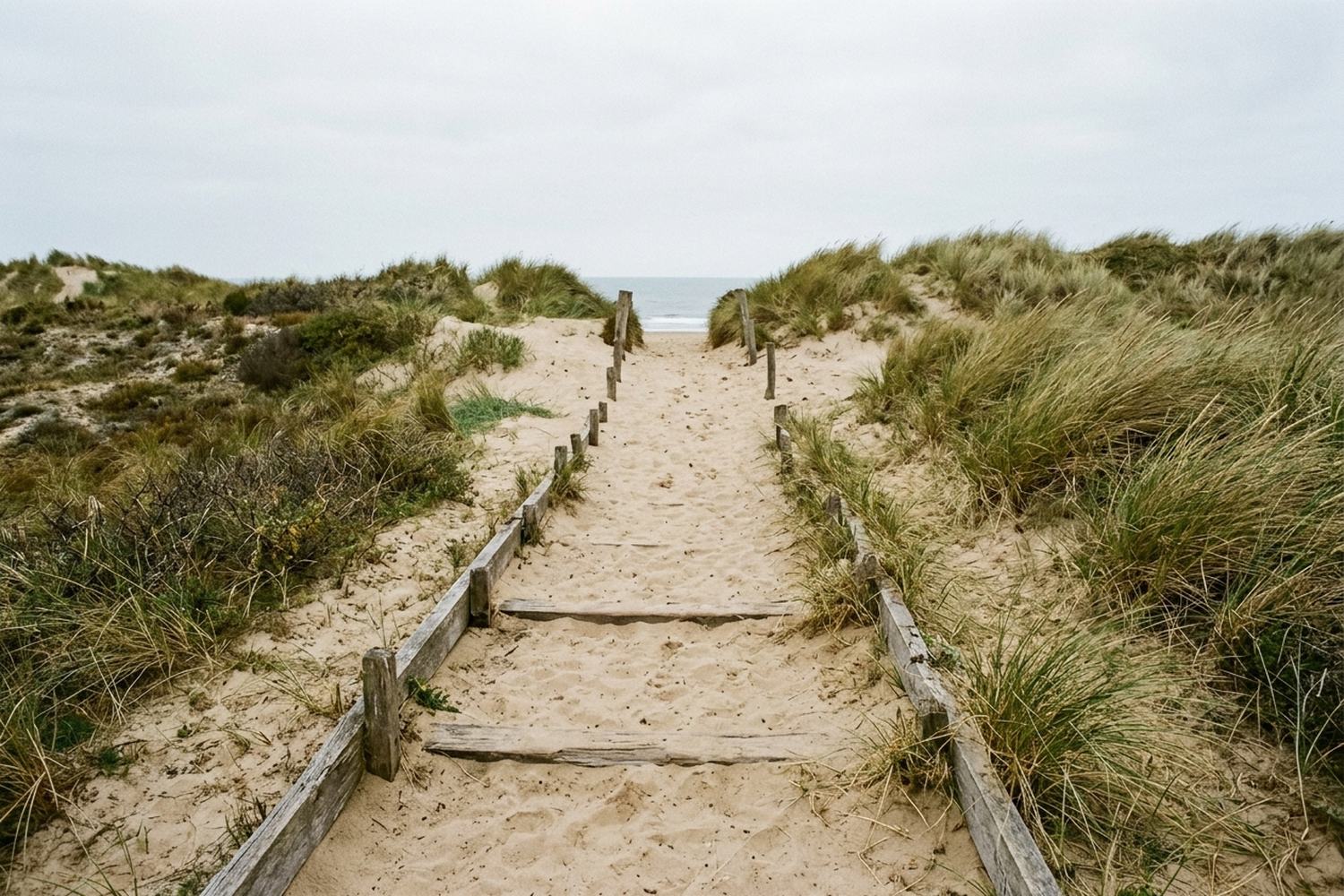
From the bike rack at the end of the paved lane it is roughly six hundred feet of boardwalk to the cottage door. That is the entire distance in question. It buys you a dune between the house and the road, which is worth more here than it sounds, because on this island the wind carries every sound a long way.
- Step
- Ten minutes on foot , Ten minutes
- How far from the road
- The cottage sits about ten minutes on foot from the last place a vehicle can stop, along a boarded path through low dune.
- What the distance costs
- The path is planked pine over loose sand, four feet wide, with maybe thirty feet of rise across two shallow dune crests and no steps. Empty, it is seven or eight minutes; with two suitcases and a week of food it is closer to twenty, in two trips. A galvanized hand cart is chained at the barrier and the balloon tires run on planking without sinking, which takes one trip down to one. Sand drifts over the boards after any hard blow from the northwest and the boards can sit under two or three inches of it until the parish crew clears them, which is days, not hours. If the ferry does not sail, nobody reaches the island at all: the crossing is tidal, the channel shoals, and a canceled sailing moves you to the next one rather than around it.
- Nights
- 6
- From
- $2,040 per person
- Shape of it
- ferry, then bicycle, then ten minutes on boards
- What is in the figure
- Six nights in a two bedroom self catering dune cottage with linen and towels; return foot passenger ferry from the mainland harbor to Nes; two adult bicycles for the full stay, delivered to the barrier; a starter box of coffee, milk, bread and eggs on arrival; island tourist tax; written directions to the barrier with the cart code; a named person to call on the island.
- What is not
- All food and drink beyond the starter box; flights and all travel to the mainland harbor; the taxi or bus from the harbor town to the pier; car parking on the mainland for the week, which runs about $9 a day at the pier lots; any vehicle permit for the island, which we do not arrange and which is refused to visitors in any case; child seats, cargo bikes or electric bicycles as an upgrade; the final cleaning fee, paid to the owner in cash or by transfer; bed sharing for a third or fourth person; anything on the water, including seal watching sailings and the mudflat walks; a second cart if your party wants two.
- Who it does not suit
- Anyone who needs a vehicle at the door, or who cannot walk twenty minutes over uneven planking and soft sand while carrying or pushing a load. Wheeled suitcases do not roll on sand where the boards are drifted. Parties arriving with more than two large cases per person will make three trips.
What the ground is actually made of
The island is sand held down by marram grass, and the dunes behind the north beach rise to about eighty feet at the highest point near Hollum. Nothing on Ameland is steep. Everything is soft. The difference matters more than gradient: a hundred yards of dry dune sand costs about the same effort as four hundred yards of pavement, and this is why the boards exist and why they are maintained.
The cottage stands in a hollow on the landward side of the ridge, with dune on three sides and a fenced yard of sand and grass. The nearest bakery is a nine minute bicycle ride into Nes. The nearest supermarket is the same ride, and it closes earlier than you will expect on a Sunday, which is the single most common thing our travelers get caught by.
The beach is on the other side of the ridge, reached by a marked crossing about four minutes further along the boards. It is wide, flat and open, and at low tide the wet sand runs out several hundred feet. On the south side of the island the land shelves into the Wadden mudflats, which appear and disappear twice a day.
When this works and when the island shuts down
Wind is the governing fact, not temperature. A steady blow out of the west is normal from October onward, and the sheltered hollow the cottage sits in is the reason the property exists at all. Summer here is mild rather than hot; the sea rarely reads much above 65F even in August.
Ferry disruption is a winter problem far more than a summer one, and it is a wind problem rather than an ice problem. Storm sailings are pulled with a few hours of warning.
- April to mid May
- Cold wind, empty beach, migrating birds on the east flats, cottages at the low end of the range
- Late May to June
- Best balance: long light until nearly 10pm, daytime highs in the low 60sF, boards clear
- July and August
- Warmest and busiest, highs around 70F, ferries full, book the cottage well ahead
- September
- Water at its warmest of the year, wind rising, very quiet on the beach
- October to March
- Gales frequent, sailings canceled at short notice, sand drifts over the boardwalk regularly
What we settle before you have a booking
Nothing is confirmed by us alone. The cottage is held by its owner, the ferry seats are held separately, and the bicycles are a third arrangement. We put all three together and send you one figure, and until those three are confirmed the figure is an estimate.
- You send the datesWe check the cottage against the owner's calendar and the sailing pattern for that week, since tidal timings decide your arrival hour
- We send a written figureTwo to four working days. It names the exact cottage, the sailing times both ways, and the cleaning fee you pay on the island
- You confirm and pay the depositThe owner releases the cart code and the barrier directions; bicycles are booked in your names for the whole stay
- Two weeks before travelWe send the final sailing times, since tide tables can shift a departure by up to forty minutes from the version quoted earlier
Tell us how much you are carrying
The answer to almost every question about this trip depends on the load. Tell us how many of you there are, how many cases, and whether anyone in the party needs the cart reserved for a second trip, and we will tell you plainly what the walk in will be like on your arrival day.