Eight feet. That is the entire distance between the trunk of your car and the kitchen table, and it is the reason people book this week rather than a hotel in Colmar. An alsace vacation package with parking at the door means the gravel apron is yours for seven nights, the lane behind it is public tarmac, and the last thing you carry any real distance is your own bag through an airport four hours west of here.
The gite sits at about 850 feet on the eastern flank of the Vosges, in the strip of vineyard that runs roughly seventy miles north to south. Villages come every three to four miles along that strip. Riquewihr, Hunawihr, Zellenberg, Beblenheim, Mittelwihr, all of them inside a twenty minute drive, all of them with a free lot at the edge of the old walls because the streets inside were laid out for carts. You park once per village and walk the rest, which is usually four hundred yards of cobble and no more.
What you are buying, practically, is a base with a kitchen and a car that never has to be unloaded twice. Groceries come home in one trip. A crate of bottles from a cellar goes straight into the trunk and out again at the door. Nobody carries anything up stairs, because the bedrooms are on the ground and first floor of a house built into a slope, and the parking is level with the entrance.
- Step
- The road reaches the door , At the door
- How far from the road
- Zero feet from the last road: the lane is public tarmac to within eight feet of the doorstep, and the gravel apron beyond it belongs to the house.
- What the distance costs
- The whole cost of the distance is eight feet of level gravel, no step up at the threshold, and a door wide enough for a suitcase carried flat. You arrive with everything in one trip from the trunk, groceries included, and arrival day is a day in Alsace rather than a day spent getting there. The lane is plowed and salted in winter as a through route for the growers; the only week it closes is harvest, when tractors and trailers use it from first light and cars are asked to park on the apron and stay put until the row is finished. Nothing needs to be carried, forwarded, or left behind.
- Nights
- 7
- From
- $2,380 per person
- Shape of it
- self catering, one base, your own car
- What is in the figure
- Seven nights in a two-bedroom gite among the vines, sole occupancy; private gravel parking for one car directly at the door; linen, towels and a full kitchen with dishwasher and washing machine; firewood for the stove from November through March; a welcome basket with local bread, cheese and a bottle from the grower next door; a printed route sheet of the villages between Marlenheim and Thann with parking notes for each; local tourist tax; a named contact reachable by phone in English for the length of the stay.
- What is not
- Flights and any onward travel to the region; car rental, fuel, tolls and the vignette-free autoroute charges you pay at the booth; all food and drink beyond the welcome basket; restaurant meals; cellar tastings and any wine you buy; museum, castle and Christmas market entry, including Haut-Koenigsbourg; parking charges in Colmar and Strasbourg, which are metered and separate from the parking here; the refundable damage hold taken at arrival; anything laundry, telephone or fuel related after departure; travel protection of any kind, which we do not arrange or advise on.
- Who it does not suit
- Anyone without a car or a driver. The nearest bakery is a mile and a half down the lane and there is no bus that serves it usefully. Skip this if you want to walk out of a lobby into a restaurant, if you would rather not drive on narrow lanes with tractors on them, or if you want somebody else to cook.
The slope, the stone, and what the ground does underfoot
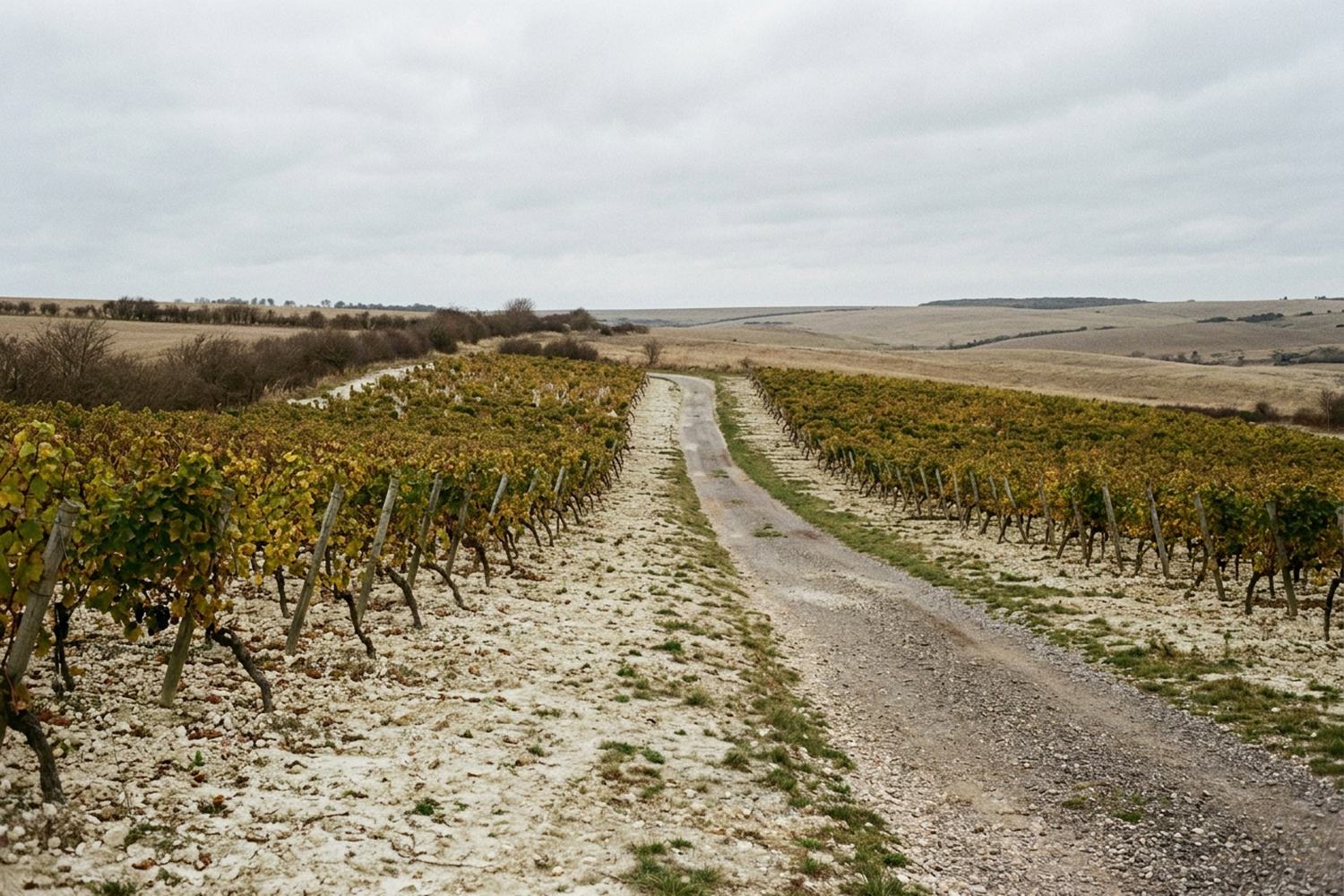
The Vosges here run north to south and the vineyard sits on their eastern shoulder, in the rain shadow. The soils change every few hundred yards, which is the whole reason the map of this place looks the way it does: granite and gneiss on the higher parcels, limestone and marl lower down, sandstone in patches, and some heavy clay on the flats near the plain. You can see the change in the color of the tractor ruts.
Underfoot, the tracks between rows are packed dirt and loose stone, cambered so the water runs off. They are fine in dry weather in ordinary shoes. After rain the clay parcels turn slick and the granite ones stay firm, and the difference is obvious within a hundred yards. Grade on the vineyard tracks above the house runs about 8 to 12 percent, so a walk up to the ridge path gains 500 to 700 feet in a mile and a half. None of that is required. You can spend the week without leaving the flat.
The villages themselves are cobbled, uneven, and crowned in the middle where the drains once ran. Half-timbered houses lean out over the streets and the ground floors are often two steps up. The lots outside the walls are gravel or asphalt and level; the streets inside are neither. That is the only real walking the week demands, and it is measured in hundreds of yards, not miles.
Which weeks work, and what September does to all of them
Late April into June gives you the vines in leaf, daytime around 62 to 72F, and villages that are busy on weekends and quiet midweek. July and August run 78 to 88F and the roads carry the most traffic of the year. October after harvest is the color, cold mornings around 40F, and cellars with time to talk. Late November through December is Christmas market season, which fills the villages on weekends and leaves the lane itself unchanged.
September is the week that behaves differently and you should know it before you choose it. Harvest runs roughly the second week to the first week of October, moving with the sugar. During those days the lane is a working road from six in the morning: tractors, trailers, pickers' vans, and a rule that cars stay put on the apron until the row beside the house is finished. Cellar visits get short or get canceled outright, because the people who would pour for you are on the slope. The trade is that you sleep forty feet from a harvest and hear it start.
- April to early June
- Vines in leaf, 62 to 72F by day, mornings near 45F, tracks dry and firm
- Late June to August
- 78 to 88F, thunderstorms most weeks, villages fullest, lots fill by ten in the morning
- Second week September to early October
- Harvest. Lane is a working road from 6am, cars stay on the apron, cellar visits often canceled
- Mid October to mid November
- 50 to 60F, color on the slope, cellars unhurried, clay tracks slick after rain
- Late November to December 24
- Market weekends, 30 to 42F, lane plowed and salted, some growers closed entirely
- January to March
- 28 to 45F, quietest weeks, stove lit daily, several villages with nothing open midweek
What is fixed before you pay the balance
Confirmation on this week is short because there is nothing to coordinate: no crossing, no transfer, no timed arrival. What we settle is which gite, which week, and what happens in the first hour after you turn off the lane.
- FigureYou send the week and the number of people. A written figure lands inside two to four working days with the gite named, the parking described, and everything the price does not cover listed
- HoldA deposit holds the week. You get the address, the lane description, the door code, and the name and phone number of the local contact
- BalanceThe balance falls due before departure. Arrival instructions go out with it: where the apron is, which direction to swing in from, and the one week of the year the lane is worked
- ArrivalYou drive in, park on the gravel, and open the door. The contact meets you or leaves the keys, whichever you asked for. A refundable hold is taken on arrival and released after departure
Tell us the week and how many
Say which month you are looking at, how many of you there are, and whether harvest is the thing you want or the thing you want to avoid. A note gets a reply before the working day is out and a written figure follows in two to four working days.